
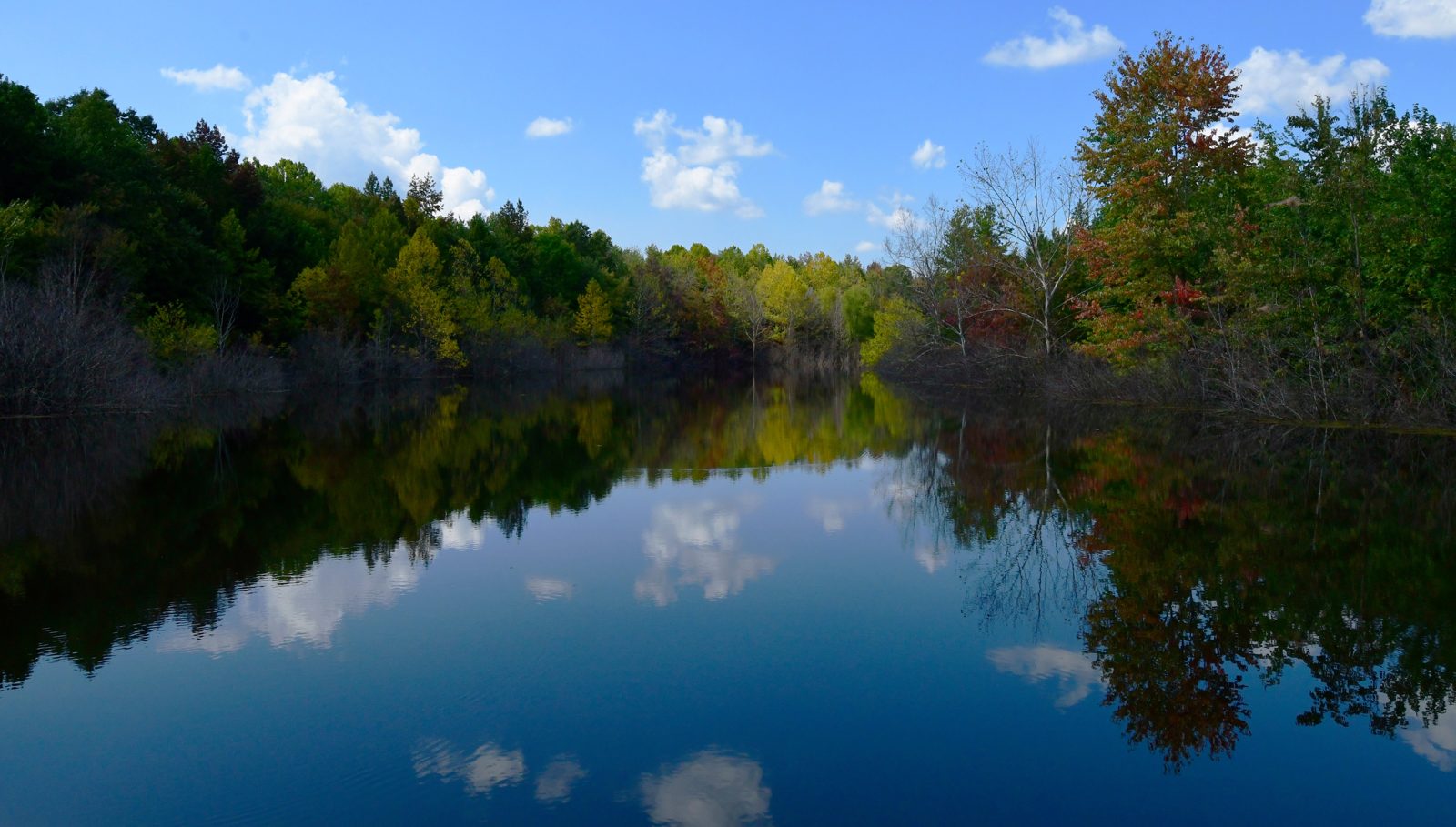
Trophy Pond in Kentucky
Lake management in Kentucky
Stocking errors, vegetation and water quality problems are harder to reverse on a big Kentucky lake. We make practical, experience-based decisions that improve the fishery and protect the lake's value.
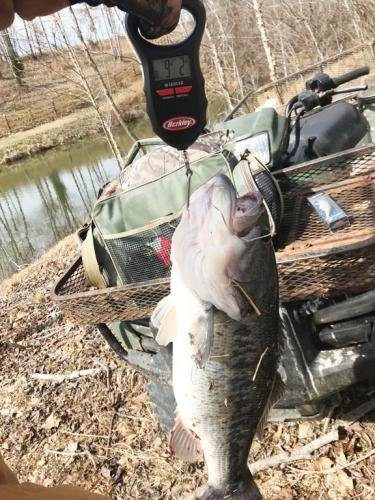
1On Kentucky water
Kentucky lakes, turnover and smallmouth
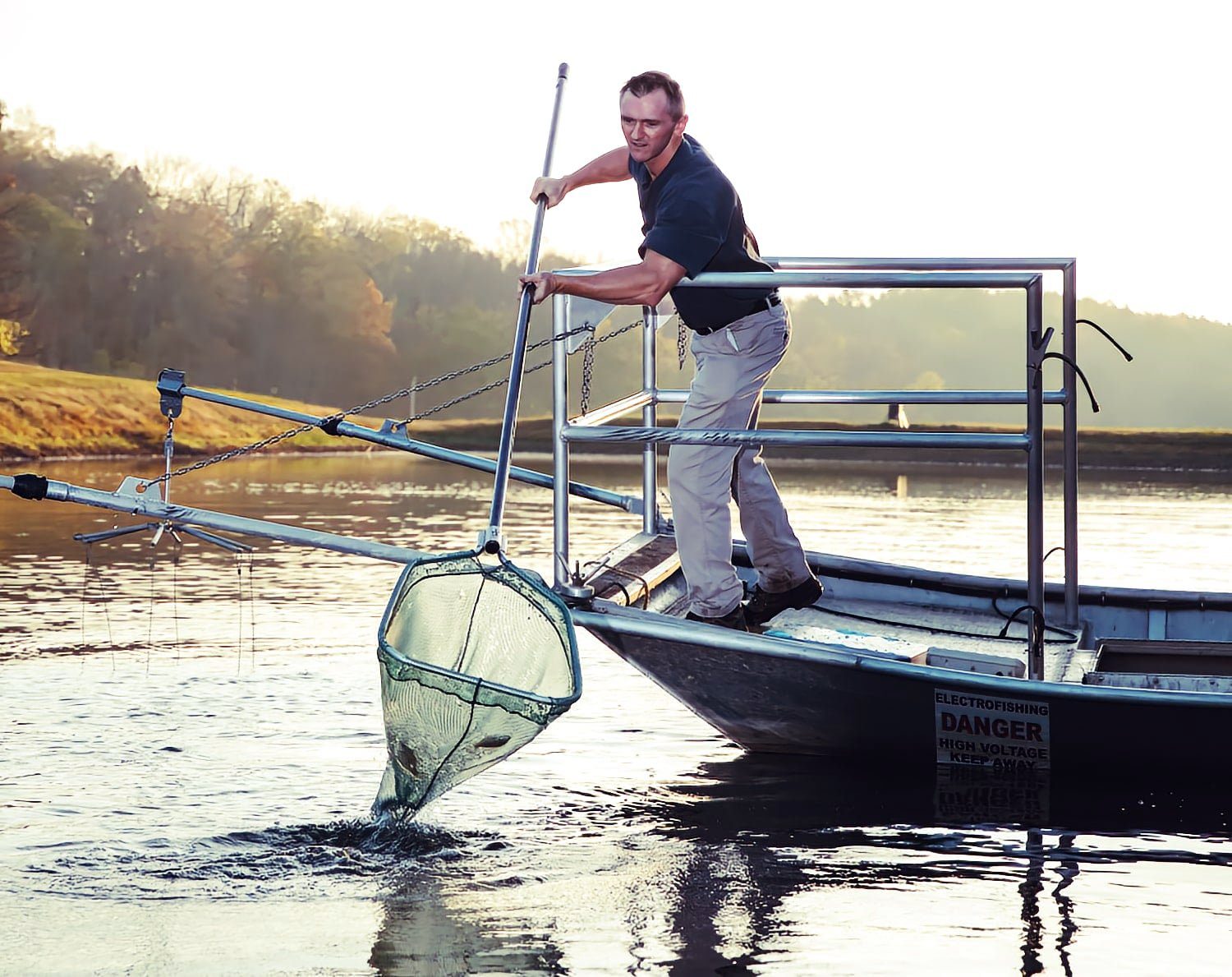
Every Kentucky plan starts with the survey: fish weighed, measured and released; pH, alkalinity, dissolved oxygen and visibility tested; the dam, watershed and spillway inspected. Kentucky State University notes that pond turnovers often follow cold, hard summer rains, wind or the first cold weather of fall, and that low dissolved oxygen causes most fish kills, which is why aeration often belongs in the plan.
Our Dale Hollow smallmouth strain gives Kentucky lake owners a second species to consider where the water suits it.
The plan can draw on surveys, stocking from our farm, weed control, liming by barge, aeration and dredging with our own excavators.
Questions
Lake management in Kentucky: questions
Why do Kentucky ponds have fish kills in summer and fall?
Kentucky State University notes turnovers often follow cold, hard summer rains, wind or the first cold weather of fall, and that low dissolved oxygen causes most fish kills. Aeration greatly reduces the risk.
Can I add smallmouth to my Kentucky lake?
Where the water suits them. Our smallmouth strain comes from Dale Hollow broodstock; the survey tells us if your lake fits.
From the blog
Read more from the owner

Ready for a survey?
Tell us about your Kentucky lake and what you want to catch.
Or call (931) 374-0536