Short answer: stock the forage fish first and the bass later. In the new ponds we set up for big bass, the bluegill, redear and minnows go in several months before the bass, so they have time to spawn and build their numbers before anything is eating them. How long that gap should be depends on the pond and on what you want it to grow, so we set the timing pond by pond rather than by the calendar.
Why the forage goes in first
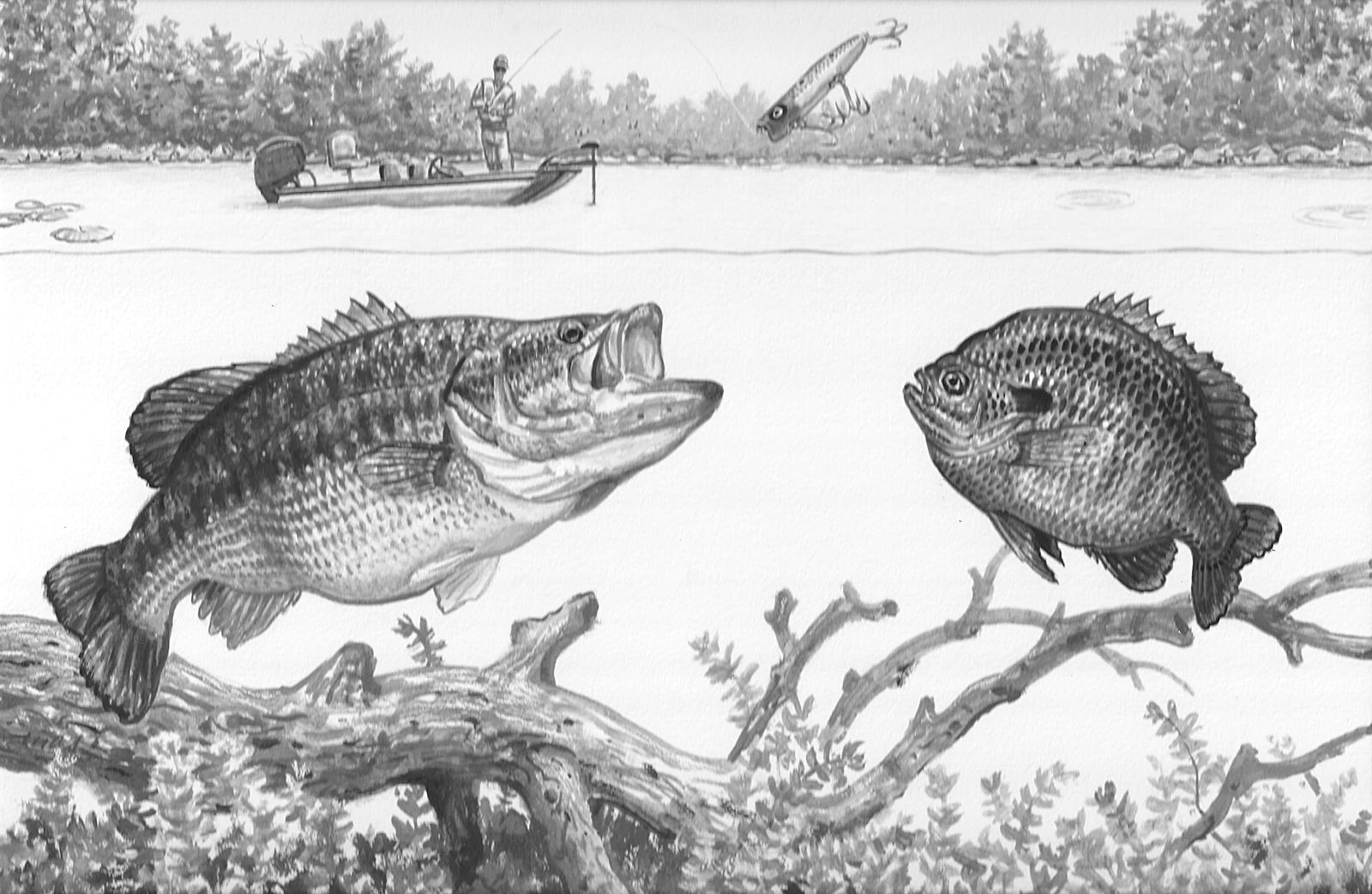
A bass can only grow on what it eats. The rule of thumb for any predator fish is that it takes about ten pounds of forage to put one pound of weight on it. Put bass into a brand-new pond at the same time as the forage, and they eat the forage down before it ever gets a chance to multiply.
That is why, when a private lake or pond is stocked from scratch specifically for trophy bass, multiple forage species are stocked several months prior to stocking the bass, specifically so they have time to spawn and build up their numbers. In one four-acre pond we stocked, four different species of forage had been in the water for a year, with automatic feeders feeding them, before the bass went in.
What the gap has looked like in ponds we stocked
- Seven-acre new pond, west Tennessee. Coppernose bluegill, fathead minnows and redear in March 2016. Florida bass that October.
- Four-acre new pond, northern middle Tennessee. Coppernose bluegill, fatheads, golden shiners and crayfish in spring 2017. Eighty one- to two-pound Florida bass in July 2018, then two hundred six- to eight-inch Florida bass in November 2019.
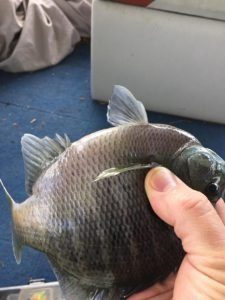
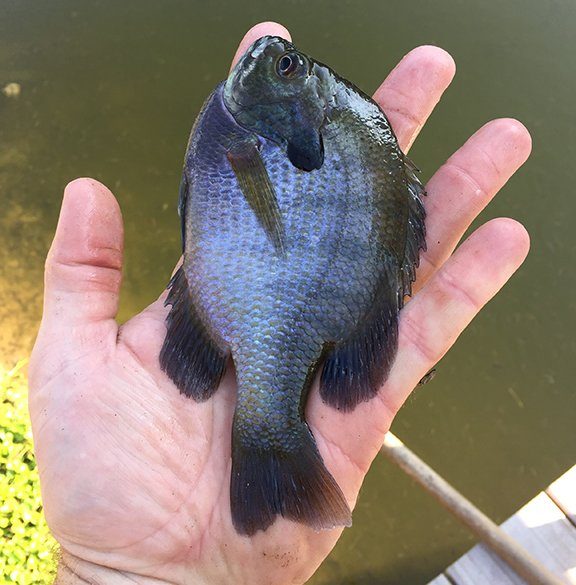
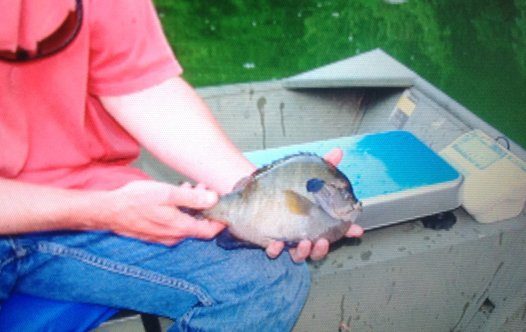
- Two-acre new pond, central Alabama. Coppernose and fatheads the last week of April 2020. Florida bass in November 2020. The first week of November 2021 the landowner sent us a photo of a one-pound-ten-ounce coppernose.
- Three-acre pond, southern Kentucky. Forage fish in July 2020. Pure Florida bass fingerlings in April 2022.
In our own records, the bass have followed the forage by anywhere from about six months to well over a year.
What usually goes into a new pond
The first stocking is built from the forage side of our list: hand-painted bluegill, coppernose bluegill, redear (including feed-trained redear), fathead minnows, golden shiners, Mississippi grass shrimp and crayfish. The predator comes after: pure Florida bass, or Dale Hollow smallmouth where the water suits them. Which species, how many and how big all depend on the size of the pond and what you want out of it, whether that is family fishing or trophy bass and bluegill.
Two things not to do in a new pond
Do not count on fathead minnows once bass are established. Fatheads never reach a size where they are safe from bass; even a six-inch largemouth can eat a three-inch fathead, and in a pond with an established bass population they get wiped out within a month or two. Their place is in the new pond, before the bass go in.
Do not add grass carp to a pond that has no plant growth. A brand-new pond with zero growth has nothing for them to do.
Getting your pond on the schedule
We stock ponds across Tennessee and in Alabama, Georgia, Kentucky, Mississippi and Arkansas, from a small pond to a thousand-acre lake. We do not publish prices; call for current pricing and availability, and see how we think about fish pricing for pond stocking. The species list and how we set up a stocking are on our pond stocking in Tennessee page.
Tell us how big the pond is, where it is and what you want it to grow, and we will lay out what goes in first and when the bass should follow. Request a stocking quote or call (931) 374-0536.