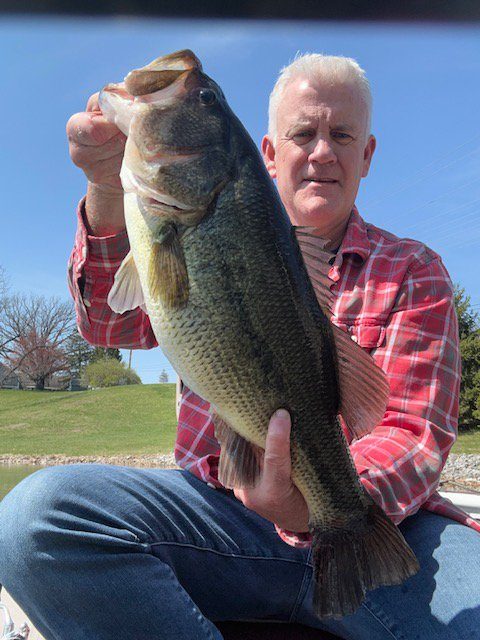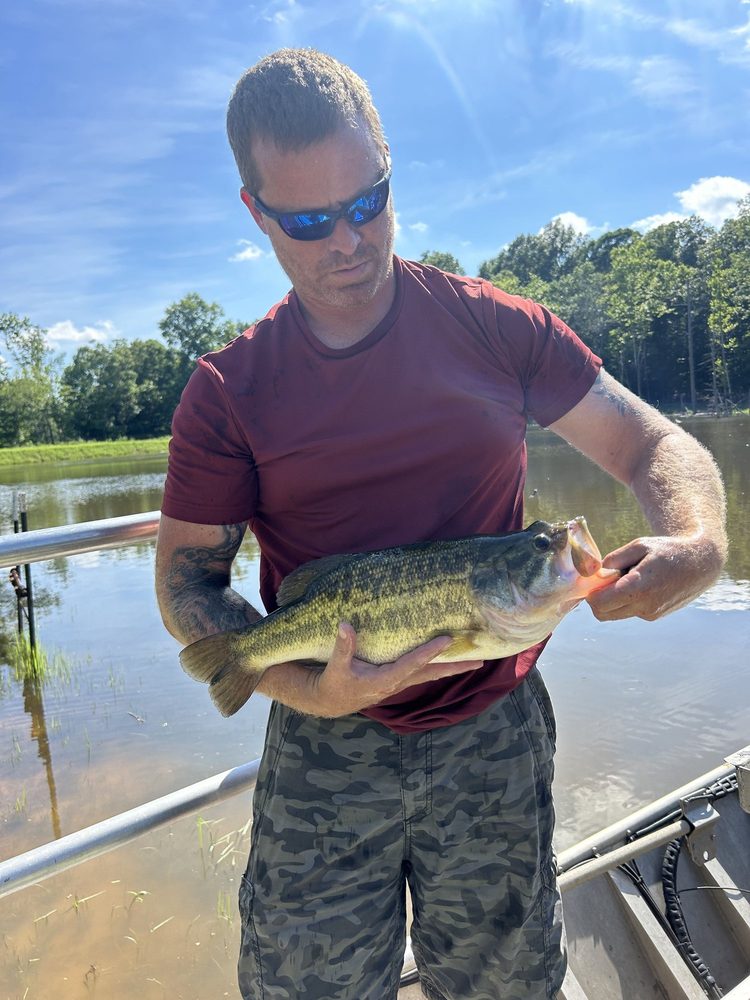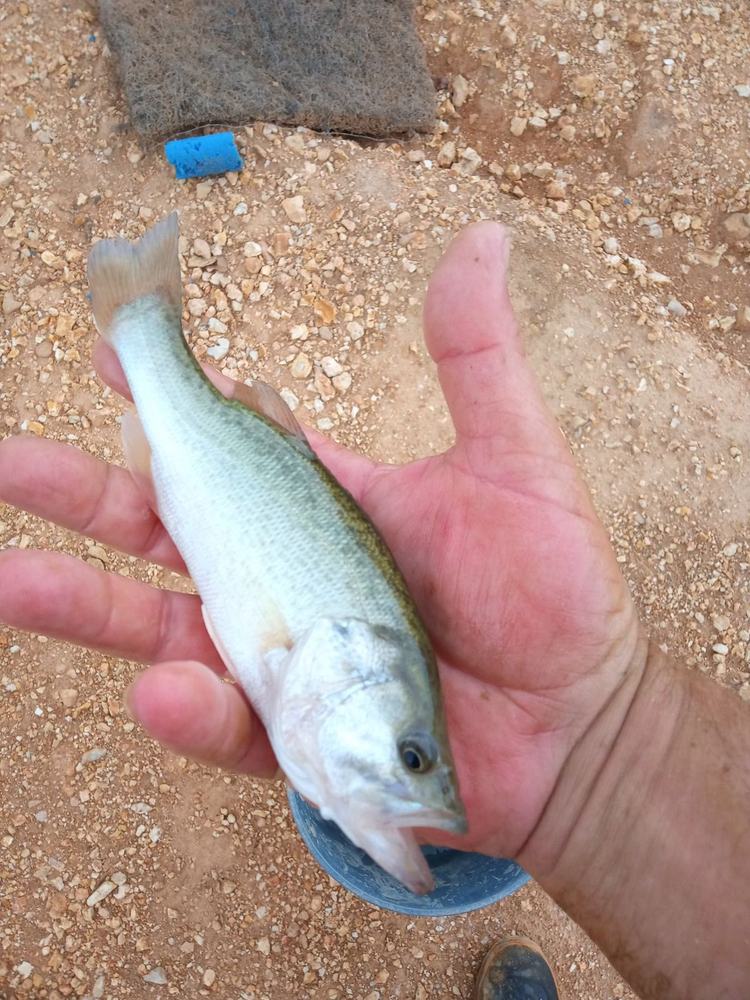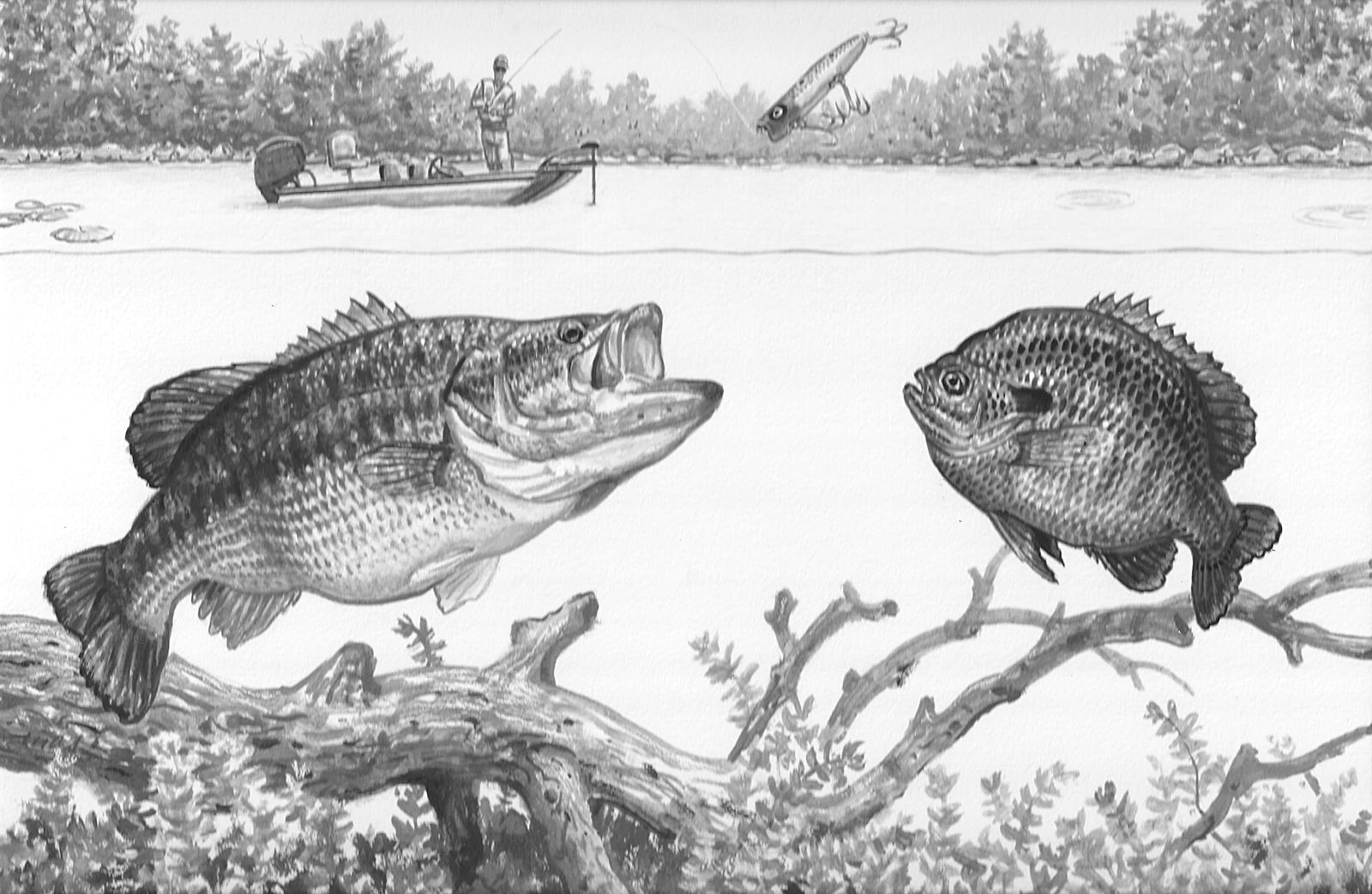
Largemouth Bass (Micropterus salmoides) is a member of the sunfish family and is hands-down the most popular gamefish in the U.S. Largemouth are a voracious predator and will consume anything they can fit into their mouths, ranging from fish to frogs to small birds and mammals. They spawn once a year in the spring when the water temperature reaches 63 to 65 degrees.
There are three subspecies of largemouth commonly stocked in Southern ponds: northern, Florida, and F-1. Northern largemouth are the subspecies native to Tennessee and most of the U.S.; they typically top out at six to eight pounds. Florida bass routinely grow to twelve and thirteen pounds, and have been caught over twenty in recent years in California. F-1 largemouth are a cross between Florida and northern largemouth; we no longer sell these fish due to their offspring commonly experiencing outbreeding depression, a genetic phenomenon that any hybrid is subject to whereby the offspring have inferior growth potential and are subject to reduced survival, increased susceptibility to disease, and many other problems. The difference in catchability between northern largemouth and Florida bass as reported by some outlets is exaggerated; and the difference in catchability between Florida and F-1 bass is negligible at best. The University of Georgia notes in their pond management publication that there is no difference in catchability among the three varieties of largemouth. TWRA has been stocking pure Florida bass into Lake Chickamauga on an annual basis since 2001, and in 2015 a new state record of fifteen pounds two ounces was caught from the lake.
We raise pure Floridas because they get drastically bigger than northern largemouth, and have none of the genetic issues that come with F-1s.