Trophy Bass in Private Lakes in Tennessee: This Is What Top-level Genetics Look Like
We have been growing our own pure Florida bass since 2019. We travel to Florida every year to catch more bass from the wild to bring back to our farm to improve the genetics of our fish. Some of our broodstock came from a famous farm in Texas renowned for their pure Florida bass genetics; but most of our brood fish are ones we caught by hook-and-line in Florida. For the last three years, we have fished the same Florida lake each year, a lake known as one of the best trophy-bass lakes in Florida; every bass brought back from that lake has been caught on a lure (not live bait). In 2024, our six biggest bass went between seven and ten pounds each, and we had two ten-pounders. This year our biggest fish was just under eight pounds - but it was a male, a rare size for a male. Here’s a video of the release of those big ones in 2024:
We found our first set of 2025 Florida bass eggs the first week of April. Those eggs hatched out in late April. When bass first hatch, the fry are almost microscopic; you have to get close to the surface of the water and look very closely just to be able to see them. They’re about 1/8” long.
Most of the bass we sold from this year’s crop were stocked in June and July, as 2-3” fingerlings. We held over a few thousand to grow out to sell at advanced sizes, 6-10”, in October; those fish were placed into two one-acre ponds and a two-acre pond, and those ponds were subsequently stocked with fathead minnows for forage.
We seined those ponds in late October. We kept the fifteen biggest bass for broodstock because of their genetics. Twelve of these fish came from a one-acre pond that was initially stocked with 1,000 bass.
Understand: these bass were stocked at fourteen times the density we stock per acre in a customer’s pond that we’re setting up for trophy bass, and the pond they were stocked into had one-hundredth the amount of forage in it, if that, of what that customer’s pond would have. So many, many more bass, and far, far less food.
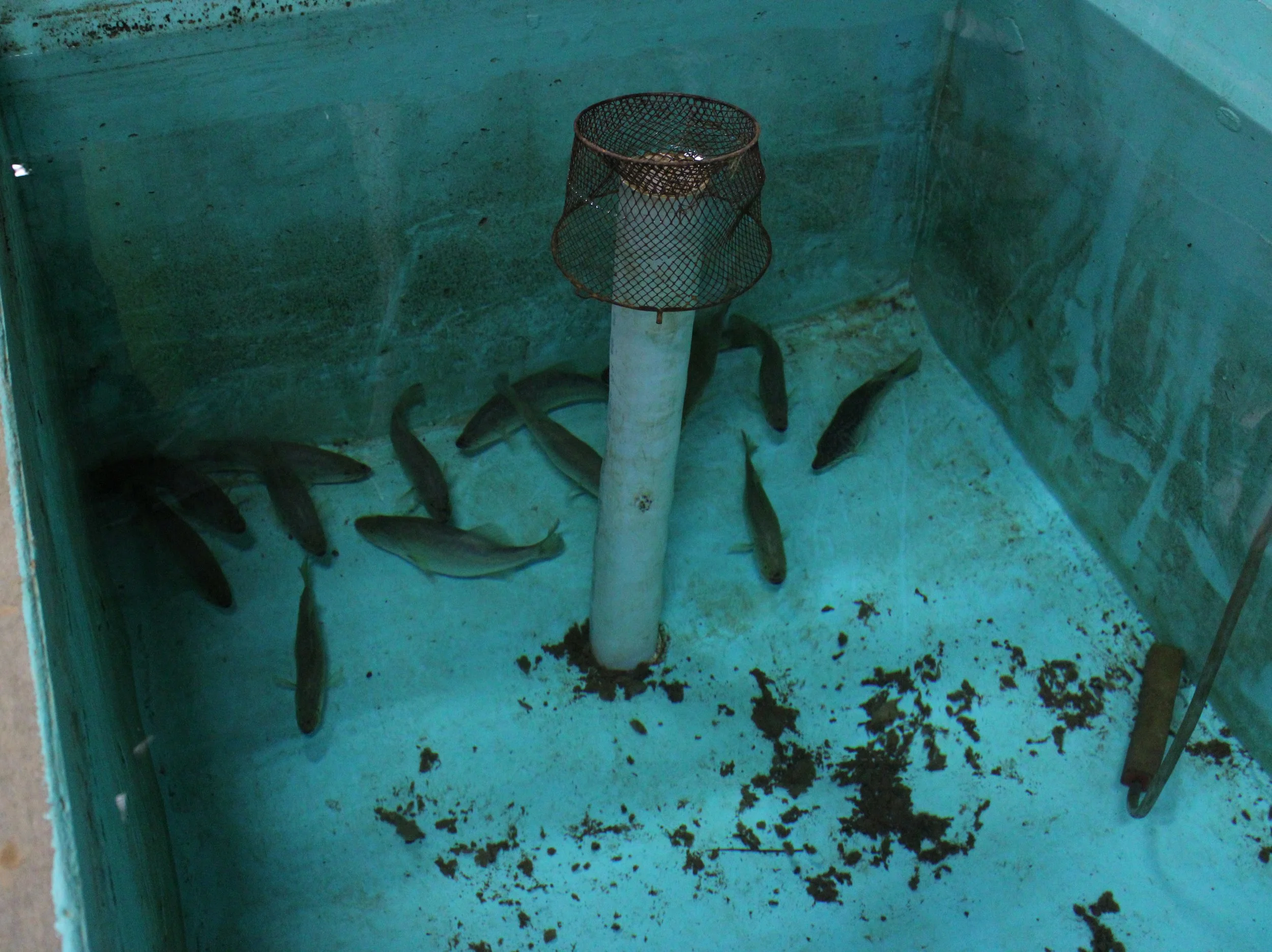
Here is a photo of those fifteen biggest bass the last week of October. All of these fish were still eggs the first week of April; they were 1/8” long near the end of April. The largest one measured 12”; all of them were over 10”, and most were over 11”.
These bass will make ten pounds within four years, probably sooner. Imagine what these bass will look like ten years from now. Pure Florida bass can live up to seventeen years; what do you think one of these brutes will look like sixteen years from now?